

Let’s be honest. Running a small business often feels like a high-wire act. You’re juggling customer emails, marketing, bookkeeping, and a hundred other tasks—all while trying to keep the big-picture vision alive. It’s exhausting. What if you had a tireless assistant? Not a replacement for you or your team, but a co-pilot. That’s the promise of AI for small business.
An AI co-pilot isn’t science fiction. It’s software that uses artificial intelligence to augment human work. Think of it like GPS for your operations. You’re still driving the car, making the decisions, but it helps you navigate the fastest route, avoid traffic jams, and maybe even find a great coffee shop along the way.
Where Your New Co-pilot Can Take the Controls
You might be wondering where to even start. The beauty is, you don’t need a massive IT project. You can plug these tools into the gaps you feel every single day.
1. Customer Conversations That Never Sleep
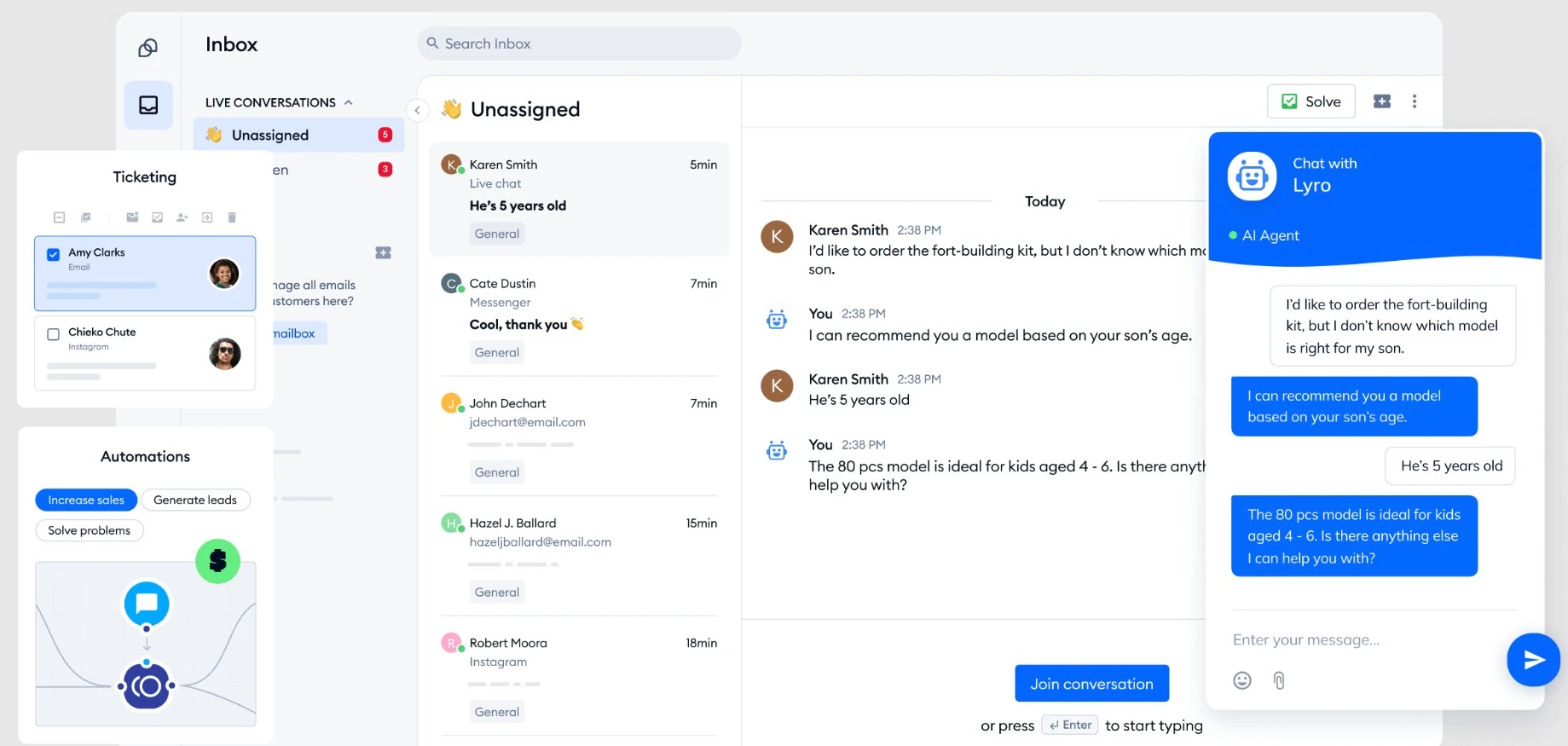
Missed leads after hours? Repetitive questions drowning your support inbox? An AI chatbot can be your first line of defense. It can answer FAQs, schedule appointments, and even qualify leads—24/7. This frees you up to handle the complex, high-value conversations that truly build relationships.
2. Content Creation Without the Blank Page Terror
We’ve all stared at a blinking cursor. AI writing assistants are game-changers for drafting blog posts, social media captions, product descriptions, and even email newsletters. The key word is drafting. You provide the core idea and brand voice, and the AI helps you overcome inertia. You then edit, add personality, and make it yours. It cuts the creation time in half, easily.
3. Taming the Administrative Beast
This is where the ROI gets tangible. AI tools can automate invoice processing, data entry, and even basic bookkeeping categorization. Imagine snapping a photo of a receipt and having it logged and categorized automatically. Or using an AI scheduling assistant that finds the perfect meeting time by syncing with everyone’s calendars. It’s like having a super-organized admin who works for peanuts.
| Business Area | AI Co-pilot Task | Human Focus |
| Marketing | Generating email subject lines, analyzing campaign performance data, suggesting SEO keywords. | Strategic planning, brand storytelling, creative direction. |
| Sales | Initial lead qualification, updating CRM entries, drafting follow-up email templates. | Building rapport, negotiating deals, understanding nuanced client needs. |
| Operations | Inventory level predictions, basic report generation, transcribing meeting notes. | Supplier relationship management, complex problem-solving, team leadership. |
Getting Started: A Realistic, Step-by-Step Approach
Okay, you’re convinced. But how do you actually do this without a meltdown? Here’s a practical, no-fluff plan.
- Audit Your Annoyances. For one week, write down every repetitive, time-sucking task you do. The “I can’t believe I have to do this again” stuff. That’s your target list.
- Pick One, Just One, Pain Point. Don’t boil the ocean. Start with the task that’s most draining or has the clearest solution. Maybe it’s social media content or invoice processing.
- Research Tools with a Free Trial. Look for tools built for SMBs. Almost all offer free trials. Test them on your single pain point. Be a ruthless judge.
- Train Your Team (and Yourself). Introduce the tool as a helper, not a replacement. Show how it takes the grunt work off their plates so they can do more meaningful work.
- Iterate and Scale. Once one tool is humming, move to the next pain point. You’ll build confidence and a tailored tech stack that actually works for you.
The Human in the Loop: Non-Negotiables for Success
This is the most critical part. AI is a powerful tool, but it’s not a mind-reader or a brand custodian. You must stay in the loop. Always review, edit, and apply your judgment. An AI might draft a technically correct email, but you add the warmth, the empathy, the understanding of that specific client’s history.
Think of it like this: the AI co-pilot handles the instrument panel and the routine checks. But you are the pilot. You have the final say, the intuition, and the responsibility for the destination. That relationship—that balance—is what makes the magic happen.
Honest Challenges (And How to Fly Through Them)
It’s not all smooth sailing. You might face some headwinds. Data privacy concerns are real—choose reputable vendors and understand their data policies. There’s a learning curve, sure. And sometimes, the output will be… weird. It might miss the mark. That’s okay. You refine your instructions—what we call “prompt engineering,” which is just a fancy term for learning how to talk to the machine effectively.
The initial cost can give pause, too. But weigh it against the hours saved. If a $30/month tool saves you 10 hours of work, that’s a staggering return. The real cost is often inaction.
The Horizon: What This Really Means for Your Business
Integrating an AI co-pilot isn’t just about efficiency. It’s about elevation. It’s about giving yourself and your team the cognitive space to be more creative, more strategic, and more connected to the work that fueled your passion in the first place. You stop being a full-time firefighter and start being a builder again.
The future of small business isn’t about being replaced by robots. It’s about being augmented by them. It’s about leveraging AI tools for operational efficiency to compete on a bigger stage, while doubling down on the irreplaceable human touch—the creativity, the relationship-building, the gut instinct—that made you successful to begin with. The question isn’t really if you can afford to try an AI co-pilot. It’s whether you can afford not to.